See more Any treatment over an air-filled area such as the lungs or guts is also not possible.
ESWT
is contraindicated in pregnant patients, particularly over the abdominal and pelvic regions, due to potential risks to the developing fetus. Although treatment of distal extremities may pose less risk, it is generally advised to avoid ESWT during pregnancy. Complications of shockwave therapy are quite rare; however, it is important that a physician assess the patient’s injury and health before treatment begins.If a tendon or ligament is almost fully torn, shockwave therapy could cause the remaining tissue to tear. If a patient has significantly low bone density (osteoporosis), shockwave therapy could cause a stress fracture. Complications are rare with shock wave therapy. People who have poor sensation (neuropathy) or hypersensitivity in the target area should not have this procedure.
Open sores also are a reason to avoid shock wave therapy. Shock wave therapy is not used in patients with heart conditions or seizures. It should not be used during pregnancy. You should discuss any potential risks with your foot and ankle orthopaedic surgeon before undergoing the procedure.
Shockwave therapy used at the proper settings can prepare patients for new implants by loosening previously implanted joints.
Extracorporeal Shockwave
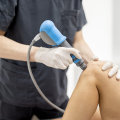
Therapy (ESWT) is a non-invasive modality employed across various medical disciplines, including orthopedics, sports medicine, and physical therapy.Extracorporeal Shockwave Therapy
is a non-invasive procedure that uses shockwaves to treat musculoskeletal conditions. It is important for patients to know that the results of shockwave therapy may not be apparent immediately but should increase over time as their injured tissues heal.Treating a 70-year-old patient with chronic tendinopathy using Shockwave may seem safe, but if a cortisone injection taken previously caused a ruptured tendon, Shockwave therapy would cause excruciating pain. Shockwave therapy is part of the extensive sports medicine and injury prevention services available through Boston Children’s Sports Medicine Division and Sports Ultrasound Clinic. Shockwave therapy has been used in medicine for decades to help with urology issues like breaking up kidney stones. This makes the eye highly susceptible to being adversely affected by the shockwaves and potentially suffering serious, severe, debilitating and permanent damage that can impinge on the patient’s ability to see clearly.
As a result, the growth plates can close too quickly, their growth can be delayed or the shockwave can cause an excessive amount of plate growth. Shockwave therapy is often used in combination with other therapies such as physical therapy and platelet rich plasma injections. There are absolute contraindications against the use of Shockwave therapy in people who have implanted devices or implanted hormones. Experience has shown people with certain health histories and conditions tend to have an adverse reaction to Shockwave.
Conditions that have absolute contraindications for the use of Shockwave therapy means it should not be used at all. Used in cardiology, urology, orthopaedics and physical therapy, the treatment employs high amplitude, abrupt, pulses of mechanical energy produced by an electromagnet coil that generates shockwaves similar to those used in lithotripsy for breaking up gallstones and kidney stones. The device sends shockwaves into the injured tissues, stimulating increased blood flow and growth hormones to the area, promoting new tissue growth.